
 9640056766
 Manisha Diabetes and Endocrine Centre, Danavayapeta, Rajahmundry, Andhra Pradesh - 533101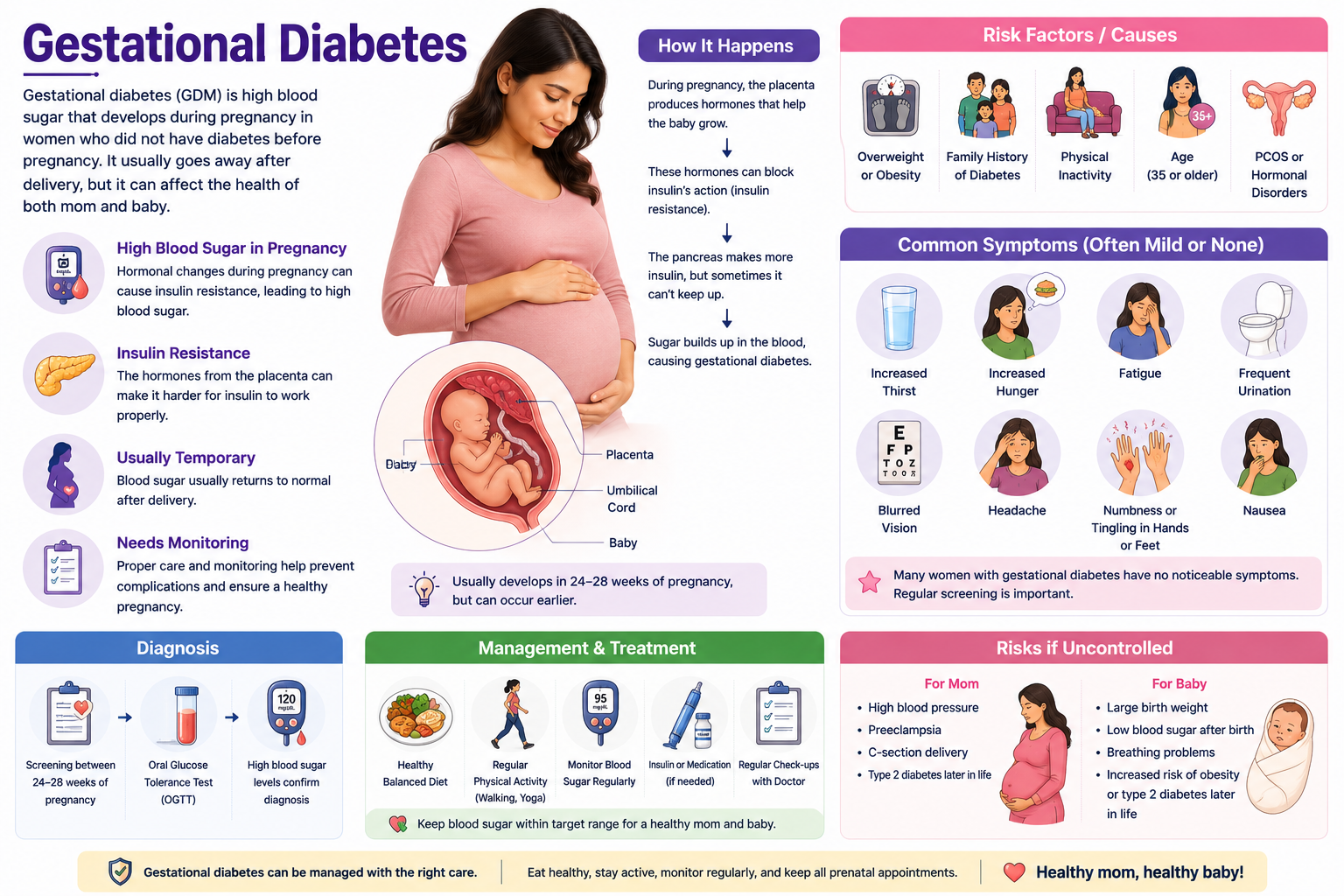
Overview
Gestational diabetes is diabetes diagnosed during pregnancy in women who did not previously have diabetes. It usually resolves after delivery, but it raises the future risk of Type 2 diabetes for both mother and child, making careful management during pregnancy and follow-up afterward important.
Symptoms
- Often no noticeable symptoms at all
- Occasionally increased thirst or urination
- Typically detected through routine pregnancy screening rather than symptoms
Causes & Risk Factors
Pregnancy hormones can increase insulin resistance, which may lead to gestational diabetes in some women. Risk factors include being overweight, having a family history of diabetes, a prior episode of gestational diabetes, or a history of PCOS.
Diagnosis
Gestational diabetes is typically diagnosed using an oral glucose tolerance test (OGTT), usually performed between 24 and 28 weeks of pregnancy as part of routine antenatal screening.
Treatment Options
Management focuses on keeping blood sugar within safe targets for both mother and baby, and may include:
- Dietary modification and physical activity
- Regular blood glucose monitoring
- Insulin therapy when needed, which is safe during pregnancy
- Close coordination with your obstetrician throughout pregnancy


Benefits Of Treatment At Our Clinic
- Coordinated care with your obstetric team
- Safe, evidence-based glucose targets for mother and baby
- Postpartum follow-up testing to screen for future Type 2 diabetes


 Emergency Contact: 9640056766